Manjushree Research Institute of Ayurvedic Science

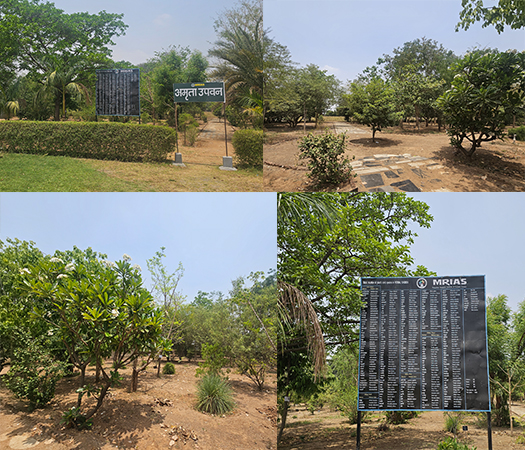
Amruta Upavan, the herbal garden of MRIAS, serves as a rich repository of medicinal plant diversity and a practical learning space for students of Ayurveda. The garden is thoughtfully developed in accordance with MSR guidelines, ensuring both academic and demonstration purposes are fulfilled.
The total area of the garden is approximately 4000 sq.m, housing an impressive collection of 1338 plants belonging to 271 different species. This diversity reflects the institute’s commitment to preserving and promoting traditional Ayurvedic knowledge.
A dedicated herbal garden demonstration room is also maintained as per MSR rules, providing an organized space for teaching, identification, and academic discussions related to medicinal plants.
Amruta Upavan is home to several rare and valuable species, including Chandan, Rasana, Tinisha, Kampillaka, Brahmi, Jyotishmati, Raktachandana, Katira, and Gokshura, which hold significant importance in classical Ayurvedic texts and therapeutic practices.
To integrate traditional knowledge with modern technology, each plant species in the garden is equipped with a QR code. By scanning these codes, students and visitors can easily access detailed information about the plants, including their botanical description, properties, and medicinal uses.
Overall, Amruta Upavan stands as a living laboratory that not only conserves medicinal flora but also enhances experiential learning, bridging ancient wisdom with contemporary educational methods.
Ayurveda is an ancient system of Indian medicine rooted in Vedic knowledge that emphasizes balance of the body, mind, and spirit through harmony of the doshas. It promotes holistic health through education, discipline, and natural healing practices.